Pilates Experience
Already have Pilates experience? This is the place to find classes that build on your existing practice.
Experienced classes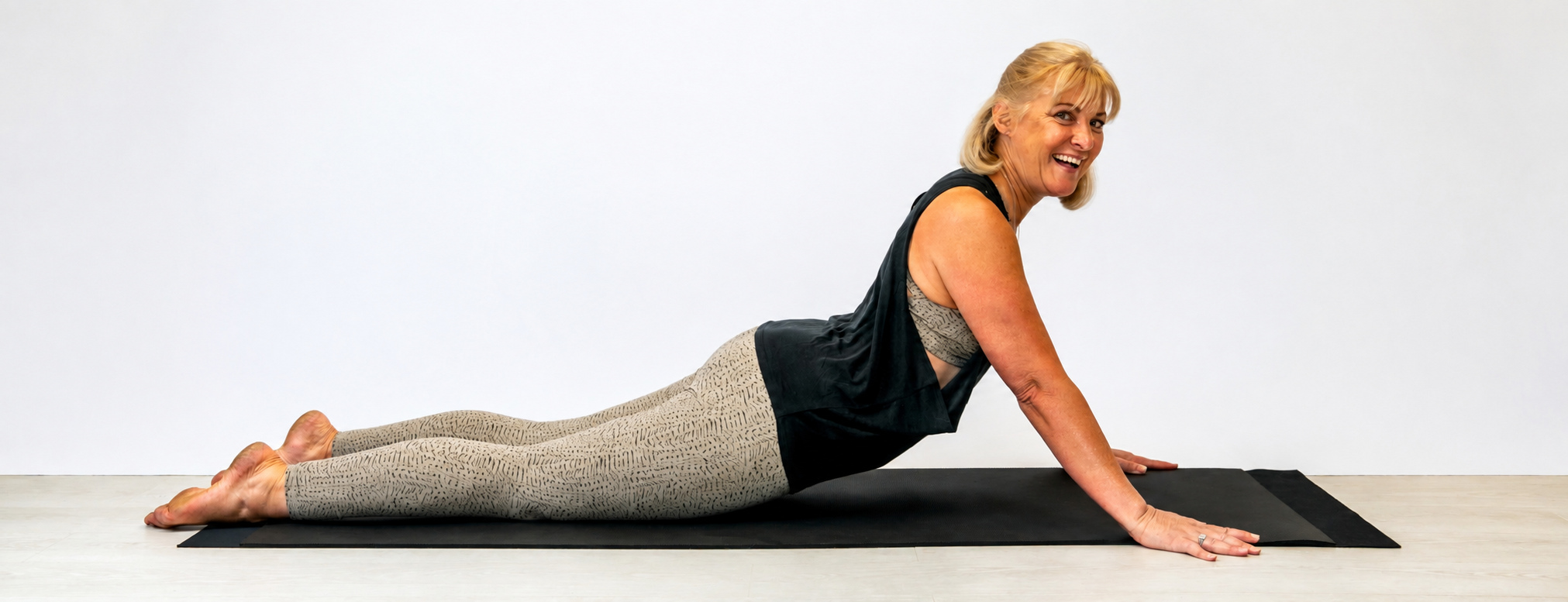
No need to be fit or flexible. Find a beginner-friendly class in Worthing or join live online via Zoom.
Already have Pilates experience? This is the place to find classes that build on your existing practice.
Experienced classesSimple, effective movements with clear guidance for adults of all shapes, sizes, and abilities.
Beginner classesA relaxed way to see whether Ultimate Pilates feels right for you before choosing a full term.
Book a trial classWhat if the painful part isn’t actually the problem?
If aches, stiffness or an old injury are starting to change what you do, it’s natural to focus on the place that hurts.
But bodies adapt.
When one part stops moving as well as it once did, another part often finds a way to help out. That can be incredibly useful at the time, particularly after an injury, but years later those same compensations may no longer be serving you quite so well. You might notice walking has changed, getting up from the floor takes more effort, stairs feel harder, or you’re gradually saying no to things you used to enjoy.
My classes help you explore what your body has stopped doing, where it has learnt to compensate and how to give it more movement options again.
Ultimate Pilates is no longer simply a Pilates class. I use the principles of Pilates alongside more than 25 years of studying human movement to create whole-body classes for modern bodies, and the lives we live, or still want to live.
The aim isn’t to make you good at exercises.
It’s to help your body become more capable for your life.
Pain and stiffness are often the end of the story, not the beginning.
An old ankle injury can change how a hip moves. A stiff foot can affect what happens further up the leg. A pelvis that no longer rotates well can leave another area doing too much.
That’s why we don’t just focus on the bit that hurts.
We look at the body as a connected system and use movement to find out what is working well, what may be missing and where your body has learnt to compensate.
The class moves together, but the learning is individual. I watch how people are moving and use what I see to shape the cues I give, so you’re not simply told what to do; you begin to understand how you are doing it and why that matters.
Some people come to me after a period of physical therapy and are ready for the next step. Others simply know their body doesn’t feel or move the way it once did.
Either way, things can change.
I’ve seen a client in her 80s go from struggling to support her own body weight to getting up and down from the floor with ease. Another, who reached 60 believing she wasn’t physically capable, now paddleboards and hikes mountains. A client with a long-term back problem returned to the yoga classes she had been forced to give up.
These aren’t stories about becoming younger. They’re about becoming more capable.
All you need is a mat, comfortable clothes and a willingness to explore what your body can do.
Classes use a mix of standing and floor-based movement, with adaptations where needed. Some things will feel easy, others may be more challenging, and that’s completely normal. You are never expected to arrive already able to do everything.
The atmosphere is friendly, relaxed and curious rather than competitive. If something feels difficult, we simply use that information to work out what your body might need.
Join in person, on Zoom, or mix the two
You can attend in person, join live from home on Zoom, or switch between the two from week to week. If you join online, you’ll be able to see me clearly and I have a dedicated monitor in the studio so I can see you too. However you choose to join, you’ll be made to feel part of the class.
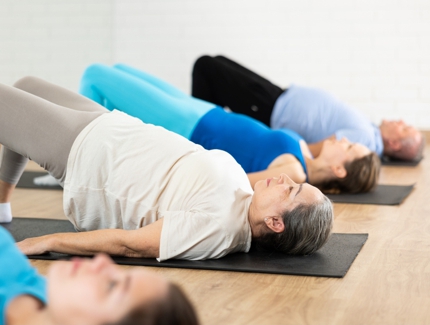 Beginner Friendly Class Join us for our beginner-friendly classes, where you'll discover the power of simple ... more info
 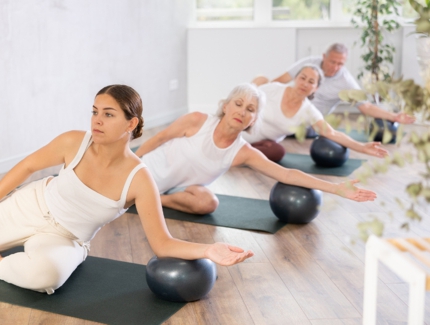 Senior Friendly Class Join us for our Senior Friendly classes, perfect for those who prefer a slower ... more info
 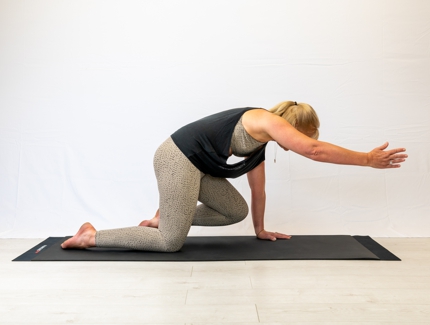 Pelvic Floor, Core and More! This isn’t your average pelvic floor class. Sure, we want strong pelvic muscles ... more info
 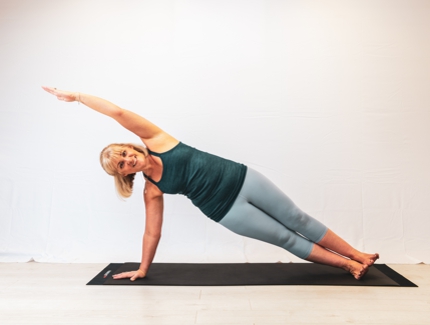 Ready to move on Class Join us for our more challenging classes, tailored for those with some movement ... more info
 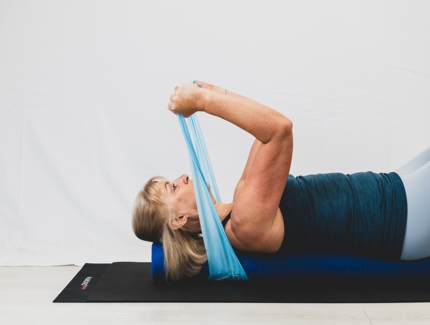 Roll and Strengthen Join us for our Roll and Strengthen classes, open to all levels! In this ... more info
 Pilates is where much of my movement education began, and its principles still shape the way I teach. But over more than 25 years, my work has evolved far beyond the traditional Pilates repertoire.
The more I studied the human body, the more interested I became in why one person can perform a movement easily while another body has to find a completely different way of doing it. That curiosity changed the way I teach.
Today, Ultimate Pilates combines the principles of Pilates with whole-body movement informed by my continued study of human movement, gait and other movement disciplines. Rather than trying to make your body conform to an ideal shape, we explore the movements it needs for real life: bending, straightening, rotating, reaching, balancing, shifting weight, getting down and getting back up.
Sometimes we are strengthening, sometimes restoring movement, and sometimes simply reminding your body of a movement it once knew but has gradually stopped using.
I’m Gaile Dean, and I’ve spent more than 25 years teaching, studying and being fascinated by human movement.
My work began with Pilates, but over the years I’ve studied a range of approaches including MELT, Anatomy in Motion and Nutritious Movement. I’ve taken what works, combined it with my own observations and developed the way I now teach.
One of my particular interests is walking, because it shows so clearly how the whole body works together. When one part stops contributing, something else usually finds a way to compensate.
That idea sits at the heart of my teaching. I want you to understand your own body, recognise the habits it has developed and discover movements it may have forgotten.
I use these same principles myself. At 60, I have no physical issues and I’m stronger and more physically capable than I was in my 30s.
My role is to help you become more capable too, with knowledge, careful observation and a friendly, supportive approach that never expects you to arrive already able to do everything.
Sometimes your body just needs the opportunity to remember what else it can do.